
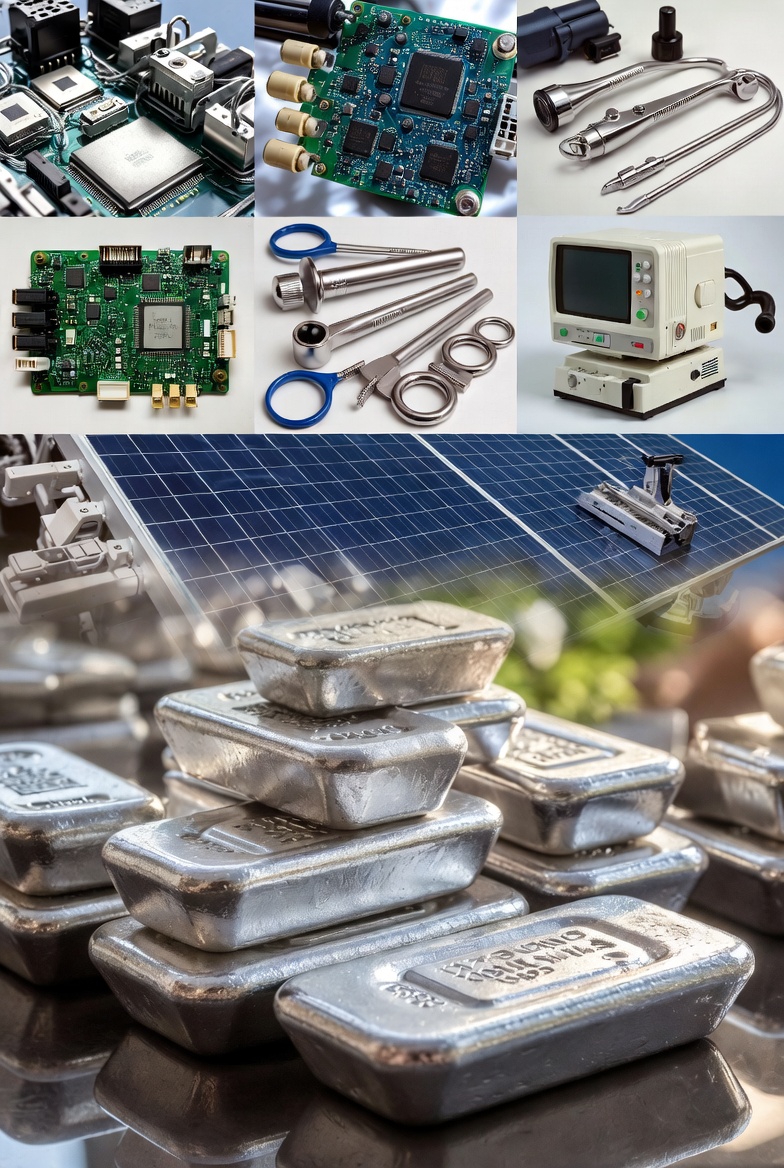
What is Silver?
Silver (chemical symbol: Ag) is a lustrous, white precious metal that has captivated humanity for centuries. Beyond its aesthetic appeal, silver boasts exceptional electrical and thermal conductivity, making it a critical resource in various modern applications, particularly in technology and renewable energy sectors.
Why Is Silver Special?
Silver is unique due to its versatility; it is the most conductive metal for electricity and heat. This makes it indispensable in high-tech applications like electronics, solar panels, and electric vehicles (EVs). Unlike gold, which is primarily valued for its status as a monetary asset, silver serves dual roles as both a precious metal and an industrial workhorse. It is much more than a "poor man's gold".
How and Where Is Silver Mined?
Silver is primarily extracted through two methods:
- Primary Mining: This involves dedicated silver mines, although such operations are less common.
- Byproduct Mining: Roughly 70-80% of global silver production comes as a byproduct from mining operations for other metals like lead, zinc, and copper.
Top 3 Silver Producing Countries
- China: Dominating the market, China accounts for a significant portion of silver production, often mining it alongside other base metals. 12.5% global market share.
- Peru: Known for its rich deposits, Peru has several prominent silver mines, contributing significantly to global output. 12.5% market share.
- Mexico: Home to some of the largest silver mines in the world, Mexico's mining industry remains a key player with about 25% market share.
How Is Silver Refined?
The refining process typically involves:
- Crushing and Grinding: The ore is crushed and ground into fine particles.
- Flotation: A flotation process separates silver from other minerals.
- Leaching: Commonly, a cyanide solution leaches silver ions from the ore.
- Electrorefining: Pure silver is extracted through electrolytic refining processes.
Current Supply/Demand Balance in 2026 and Future Projections
The supply-demand landscape for silver is tightening:
- 2026 Projections: Demand for silver is expected to reach approximately 1.17 billion ounces, surpassing mine supply by 500 million ounces.
- Cumulative Shortages: From 2021 to 2025, global inventories declined significantly, resulting in cumulative shortages exceeding 820 million ounces.
- Industrial Demand Growth: Approximately 55-60% of silver consumption comes from industrial applications, particularly in solar technology, EVs, and electronic devices.
Primary Uses for Silver
- Electronics: Silver's conductivity makes it essential in circuit boards and connectors.
- Photovoltaics: Silver is a critical component in solar panels, with demand projected to reach 120-130 million ounces annually due to the green energy transition.
- Medical Applications: Its antibacterial properties render silver valuable in medical devices and treatments.
Why Is Silver Considered a Strategic Metal?
Silver's strategic importance has been recognized, particularly as it relates to clean energy systems and high-tech manufacturing. In 2025, the U.S. designated silver as a critical mineral, emphasizing its role in achieving energy independence and combating climate change.
Implications of Not Identifying Additional Sources
If new silver sources cannot be identified, several consequences may ensue:
- Price Volatility: The continued shortfall can lead silver prices to surge, projected to reach $100-150 per ounce if deficits persist.
- Economic Disruption: Industries reliant on silver will experience increased costs, potentially leading to slower advances in clean energy technologies.
Substitutes for Silver
While there are few direct substitutes for silver due to its unique properties, potential alternatives could involve:
- Copper: Used as a less expensive conductor, though it lacks the conductivity and antibacterial features of silver.
- Conductive Polymers: Emerging materials are being explored, but they do not yet match silver's proven reliability and efficiency.
Conclusion
Silver stands tall in the shadow of gold, proving itself not just as a precious metal but as an essential element of tomorrow’s sustainable technologies. Its unique properties make it invaluable in various sectors, and the imperative to secure additional sources has never been clearer. As demand continues to soar, those who recognize silver's worth will pave the way for innovations that could shape our future.