
A path toward presence
Imagine: an autumn day. The wind rustles softly through the leaves. I walk slowly through the forest, camera around my neck, head full of thoughts: deadlines, worries, that one conversation still echoing. But the moment I look through the viewfinder and start searching for patterns, colors blending, lines dancing, everything disappears. The rumination stops. There is only this moment: the lens as anchor, nature as an invitation to be fully present.
For me, photographing in nature is no longer just a hobby; it has become a form of mindfulness in motion. Especially abstract nature photography feels like meditation: you zoom in on details until recognizable forms fade away and only pure structure, rhythm, and feeling remain. You must observe, feel, receive. And precisely that process brings peace. It forces you into a flow where time dissolves and thoughts fall silent. A good photo does not arise from technique alone, but from truly experiencing the image emotionally first. And when it succeeds, you pass that same emotion on to whoever looks at it.
Do you recognize this? Then you are not alone. Thousands of photographers and researchers describe the same thing: photography, especially in nature and especially abstract, as a path toward presence, relaxation, and emotional connection. It is a quiet practice that, time and again, brings me back home to myself.
Mindful photography: what is it really?
Mindful photography is conscious slowing down: your camera as a tool to be fully in the now, without judgment or performance pressure. It is not about the “perfect” photo, but about experiencing the moment itself. As Guy Tal writes so beautifully in his essay The Mindful Photographer: you cannot compose something you do not even know exists. You must first see, feel, be present.
The parallels with classic mindfulness are striking:
- Presence in the here and now: Through the lens you look as an anchor, just like breath in meditation. Every click is a conscious breath.
- Flow state: Deep concentration where time disappears and rumination finds no space. You are fully absorbed in what unfolds before you.
- Sensory openness: Not just looking, but also listening to the rustle of leaves, smelling the damp earth, feeling the cold wind on your hands.
- Letting go of expectations: You do not force an image; you receive it. The result may be imperfect, it is about the experience, not likes or scores.
In nature, this becomes even more powerful. You walk slowly, linger at one tree or reed bed, seek abstraction in details rather than the big overview. Organizations like NANPA (North American Nature Photography Association) and writers on slow photography explicitly call this an antidote to hurry, perfectionism, and mental noise. It is photography as a zen practice: slowing down to see what is really there.
Scientific evidence: why it works
It is not some vague idea, there is growing research confirming it. A 2024 study among Chinese students showed that just 5 minutes of nature photography significantly lowers blood pressure, reduces anxiety, and increases feelings of calm; more strongly than photography in an urban environment. Other studies (such as reviews in Positive Psychology) demonstrate that mindful photography strengthens positive emotions, increases gratitude, reduces rumination, and functions as emotion regulation.
Why nature and abstraction in particular? Nature exposure activates brain areas that drive relaxation and wonder (similar to meditation). Abstract images, without immediate recognition, invite inner reflection and prevent distraction. They create space for personal emotions and interpretations, which is healing.
In short: if you experience that stress blocks and opening up to nature heals, that is scientifically sound. And it is no coincidence that abstraction in particular amplifies that effect: it removes the noise and leaves only the pure feeling.
Abstract nature photography as the ultimate mindfulness practice
Why abstract? Because it forces you into deep observation. You are not looking for a “beautiful view,” but for patterns, textures, lines, colors. Recognition fades; what remains is pure form and feeling.
Take a dense canopy of autumn leaves: yellow, red, brown, green blending into one flat plane. By zooming in with a wide aperture it becomes frame-filling, no more trees, only harmony of color. This is mindfulness: you are not hunting for a subject, you receive a composition that radiates calm. It feels like breathing in color.
Or a bare tree in winter: branch structure zoomed in until it becomes abstract. In black-and-white, with high contrast and sharpened lines, it turns into a graphic artwork. It raises questions: strength? Emptiness? Vulnerability? Exactly as abstract nature photography often heals, it invites feeling and reflection without words being necessary.
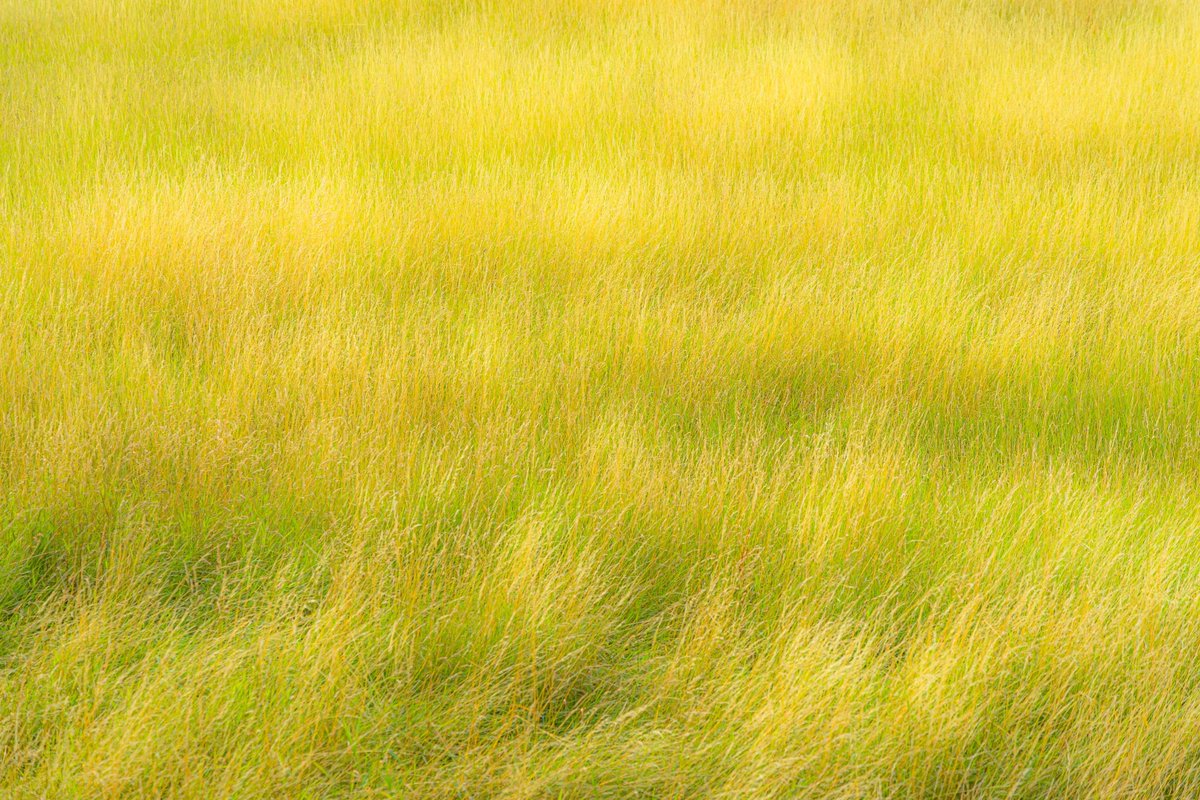
And a reed bed, zoomed in so only parallel lines remain: a rhythmic pattern that almost breathes. By focusing on repetition, calm arises. The rhythm follows your own breathing. This is pure flow.
Other examples that touch many mindful photographers: rippling water turned silky by long exposure, moss patterns like abstract paintings, or misty branches in minimalism. Again and again: less is more, details are everything. And in that simplicity lies the greatest richness.
The role of emotions: feeling while making and while looking
Emotion is the core. While making: if I am tense, I see nothing. Only when I relax do I open up. Nature “comes in.” I feel the light on my skin, hear the rustle, smell the earth, and suddenly I know intuitively where to point. Technique (aperture, shutter speed) serves that feeling. A photo becomes “good” not by sharpness alone, but by holding the moment. Guy Tal says it perfectly: the most rewarding photographs arise from the experience itself.
The same happens when viewing. Abstract nature images evoke emotions: calm, wonder, melancholy, strength. The viewer lingers, projects their own feelings, and experiences a mini-mindfulness moment. Research shows that nature images (especially abstract ones) lower stress and create calm. The experience, that a good photo creates the desire to keep looking and truly experience, is confirmed here: the image acts as an emotional bridge.
Practical: how do you start yourself?
Want to experience this yourself? Here is a simple start, based on what works for me:
- Choose one location (forest edge, park, reed field) and put your phone on airplane mode.
- Do not look for a picture; walk slowly, observe. Linger at one detail.
- Zoom in on patterns: lines, textures, colors. Try filling the frame.
- Limit yourself: max 5-10 shots per spot; deep focus instead of clicking away.
- Experiment: wide aperture for blur, black-and-white for structure, long exposure for movement.
- Afterwards: do not judge immediately on the screen. Take the photos home, look at them calmly on a large screen and feel what they do to you.
Extra tip: try “photo-ecotherapy”: combine with sitting in silence or breathing exercises. Many people already feel that shift to calm after 10-20 minutes. I do it often: just sit against a tree trunk, eyes closed, then slowly open them and see what nature shows me.
Closing: photography as lifelong mindfulness
This experience is a recognized phenomenon: abstract nature photography is meditation, therapy, and creation in one. It makes you more open to the world, calmer in your mind, and more emotionally connected; to nature and to yourself.
The most beautiful photos are those first felt. And those same feelings you leave behind in the viewer. That is the real gift.
So pick up your camera, go outside, and let nature come in. Seek those leaf colors, branch structures, reed lines. Feel. Receive. And who knows: you may inspire another, or yourself, to more mindfulness in everyday life.
I am curious: which abstract nature moment touches you the deepest? Feel free to share.
Light and shadow, always,
Lumière Novan (Luno)
Luminos – Eternal Gardens